 11
11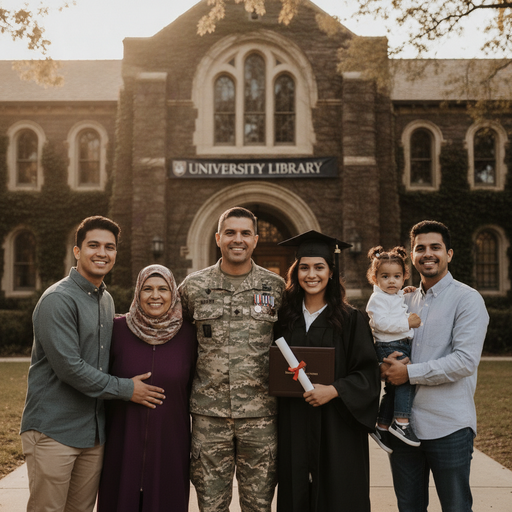
Imagine being seventeen years old and having lived in seven different states, two different countries, and attended four different high schools. For Sarah, this wasn’t a choice; it was her life as a military “brat.” While her peers were building long-term roots, Sarah was mastering the art of the “goodbye” and the “hello.” She watched her father deploy three times, and her mother navigate the complexities of finding a new job every time the family received PCS (Permanent Change of Station) orders. Now, as high school graduation looms, Sarah faces a new challenge: how to pay for a college education when the family budget has been stretched thin by the nomadic lifestyle of the U.S. Armed Forces.
Sarah’s story is not unique. Millions of military family members across the United States face the daunting reality of rising tuition costs. However, there is a silver lining. The nation recognizes the immense sacrifices made by not just the service members, but their spouses and children as well. A vast landscape of scholarships specifically designed for military families exists to bridge the gap between service and the schoolroom. This guide is dedicated to families like Sarah’s, providing a roadmap to the financial resources they’ve earned through their dedication to the country.
Service members often have access to the GI Bill, but what about the rest of the family? Spouses frequently face “underemployment” due to frequent moves, making it difficult to save for their children’s education or pursue their own advanced degrees. Children often miss out on local state-based scholarships because they move too frequently to establish long-term residency. Military-specific scholarships acknowledge these unique hurdles. They are more than just financial aid; they are a handshake and a “thank you” for the years of missed birthdays, holiday deployments, and the constant stress of the unknown.
The children of our service members are among the most resilient students in the country. To support them, several major organizations offer substantial financial backing:
Administered by the Fisher House Foundation, this program is a staple for military families. It was created to recognize the contributions of military families to the modern troop community. It is primarily funded through the generosity of manufacturers and suppliers whose products are sold at military commissaries. If you are a dependent child of an active-duty, reserve/guard, or retired military member, this is a must-apply.
Folds of Honor provides educational scholarships to the spouses and children of fallen or disabled service members. Their mission is powerful: to “Honor their Sacrifice” and “Educate their Legacy.” Since 2007, they have awarded thousands of scholarships, ensuring that the families of those who gave the most are never left behind in their pursuit of knowledge.
As the nation’s oldest and largest provider of need-based scholarships to military children, this foundation specifically targets the children of Marines and Navy Corpsmen. They look for students who demonstrate the Marine Corps values of honor, courage, and commitment. Whether you are pursuing a traditional four-year degree or a career in the private sector through vocational training, this foundation has options.
Military spouses are the backbone of the home front. However, the transient nature of military life often puts their career and educational goals on the back burner. Fortunately, several programs aim to change that narrative:
The MyCAA Scholarship is a workforce development program that provides up to $4,000 in financial assistance to eligible military spouses. This isn’t just for any degree; it’s specifically designed to help spouses pursue licenses, certifications, or associate degrees in portable career fields. This ensures that no matter where the military moves the family next, the spouse has a career that can move with them.
The NMFA is a fierce advocate for military families. Their scholarship program is remarkably flexible. Whether you need money for tuition, clinical supervision for a mental health license, or even funds to start your own small business, the NMFA understands the diverse needs of the modern military spouse.
ThanksUSA provides post-secondary scholarships for the children and spouses of active-duty military persoel. They focus on those with a demonstrated financial need and a strong academic record. What makes them special is their commitment to providing resources beyond just the check, often coecting recipients with mentoring opportunities.
Each branch of the military has its own “Aid Society” or dedicated foundation that looks after its own. These organizations often feel like family, offering a more personalized approach to financial aid.
One of the most significant changes in military benefits over the last two decades is the ability for service members to transfer their Post-9/11 GI Bill benefits to their spouse or children. While this is not a “scholarship” in the traditional sense, it functions as a massive educational fund.
The transfer must be made while the member is still on active duty and usually requires a commitment to serve additional years. For a family like Sarah’s, having her father transfer even 50% of his GI Bill could mean the difference between graduating debt-free or carrying student loans for decades. It is vital for service members to plan this transfer early in their careers.
Wiing a scholarship is competitive. For military families, the key is to leverage your unique story. Here is how to make your application shine:
Don’t just list your grades. In your essays, talk about what it meant to be a military dependent. Did moving every two years make you more adaptable? Did your parent’s deployment teach you responsibility at a young age? Use these experiences to demonstrate character and resilience.
Military scholarships often require specific documents like the DD-214 (for veterans), the DEERS enrollment verification, or a copy of the service member’s recent orders. Create a “Scholarship Folder” (digital and physical) where these documents are always ready to go. Missing a deadline because you couldn’t find a form is a heartbreak you want to avoid.
Because military families move often, teachers and mentors may lose touch. Stay in contact with those who know your potential. When asking for a recommendation, provide them with a “brag sheet” of your accomplishments so they can write a detailed and personalized letter.
The road to a college degree doesn’t have to be paved with financial stress. For the families who have stood behind our nation’s defenders, these scholarships represent a debt of gratitude. From the Fisher House to the branch-specific aid societies, the support system is robust and ready to help.
As Sarah sits at her graduation ceremony, looking at her parents in the front row, she knows that the future is bright. Not just because of her hard work, but because a community of supporters recognized her family’s service. If you are a military spouse or child, remember: you have earned these opportunities. Start your search today, tell your story with pride, and take the next step toward your dreams.