 11
11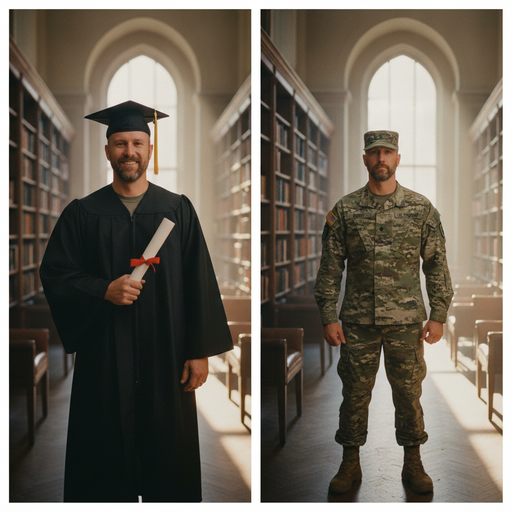
Imagine standing at a crossroads. For years, your life was defined by the rhythm of the bugle, the weight of a rucksack, and the unspoken bond of a unit. Then, one day, you hand in your gear, sign the final papers, and walk out of the gate as a civilian. The silence is often the loudest part of the transition. For many veterans, the next logical step is education—a chance to pivot those hard-earned leadership skills into a corporate boardroom, a laboratory, or a classroom of their own. However, the sticker shock of modern tuition can be a daunting enemy.
I remember talking to a former Army Sergeant named Mark. He had spent eight years in infantry and wanted to pursue a degree in Mechanical Engineering. He had his GI Bill, but with a mortgage and two kids, the “basic allowance for housing” just wasn’t cutting it in a high-cost city. He felt like he was failing his family to pursue his dream. That is, until he discovered the vast world of private scholarships specifically designed for those who served. This guide is for the Marks of the world—the men and women looking to bridge the gap between their military service and their professional future.
Before diving into private scholarships, we must acknowledge the bedrock of veteran education: the Post-9/11 GI Bill. It is arguably one of the most significant pieces of legislation for the military community, providing tuition assistance, a monthly housing allowance, and a stipend for books. However, it is not a “one size fits all” solution. Depending on your length of service and the type of school you attend, there might still be a significant financial gap.
This is where the Yellow Ribbon Program comes into play. If you are attending a private school or an out-of-state public university where the tuition exceeds the GI Bill’s cap, the Yellow Ribbon Program allows the school and the VA to split the remaining cost. But even then, what about the “hidden costs” of college? The parking passes, the high-end software for your major, the childcare, and the simple reality of inflation? That is why pursuing additional scholarships is not just a luxury; for many, it is a strategic necessity.
There are several powerhouse organizations dedicated to ensuring veterans don’t just “get by” in college, but thrive. Here are some of the most impactful opportunities available today:
Named after the NFL player who walked away from a multi-million dollar contract to serve as an Army Ranger, this foundation is for the “leaders of the next generation.” They don’t just look for good grades; they look for veterans who want to solve the world’s most pressing problems. The Tillman Scholars program provides significant funding and a lifelong network of high-achieving peers.
The Veterans of Foreign Wars (VFW) partnered with Sport Clips to provide scholarships of up to $5,000. This is a fantastic “gap-filler” scholarship. It is aimed at active-duty service members and veterans who have retired or been honorably discharged. It’s a straightforward application that focuses on your service and your financial need.
AMVETS (American Veterans) offers several different scholarship tracks. Whether you are a veteran, a member of the Guard or Reserve, or even a child or grandchild of a veteran, they have specific pots of money set aside. They focus heavily on those who have exhausted their government benefits but still have a degree to finish.
Sometimes, the best place to look for money is within the specific culture of your former branch. Each service has its own support organizations that look out for their own.
Furthermore, if you are moving into a specific field like STEM (Science, Technology, Engineering, and Math), organizations like Google and Microsoft offer SVA (Student Veterans of America) scholarships. These are designed to increase the pipeline of veterans entering the tech workforce, recognizing that the discipline learned in the military makes for excellent programmers and engineers.
Military service is a family affair. While the veteran is the one in the uniform, the spouse and children are the ones holding down the home front through deployments and constant moves. Recognizing this, many organizations focus their financial aid on the family unit.
The Fisher House Foundation offers the “Scholarships for Military Children” program, which is primarily funded through the manufacturers and suppliers whose products are sold at military commissaries. Additionally, the MyCAA (My Career Advancement Account) program provides up to $4,000 for military spouses to pursue licenses, certificates, or associate degrees in portable career fields. For those who lost a parent in the line of duty, the Fry Scholarship provides benefits similar to the Post-9/11 GI Bill, ensuring that the legacy of the fallen is honored through the education of their children.
When you sit down to apply for these scholarships, you might feel a bit of “imposter syndrome.” Many veterans think, “I was just doing my job; I’m not a hero.” But scholarship committees aren’t looking for a Rambo story. They are looking for your “transferable skills.”
When writing your essay, focus on these three pillars:
The biggest mistake veterans make is waiting too long to apply. Scholarship cycles often close months before the semester starts. If you wait until you get your tuition bill, you’ve already missed the boat for that year. Start your search at least six to nine months before your first class.
Another pitfall is ignoring the “small” scholarships. Everyone wants the $20,000 full-ride, but those are highly competitive. However, if you win four different $1,000 scholarships, that’s $4,000 that covers your books, your commute, and your coffee for the entire year. Those smaller wins add up quickly and often have much less competition.
Transitioning from the military to the civilian world is essentially a mission change. Your new objective is your education. Just as you wouldn’t go into a tactical operation without scouting the terrain and gathering your gear, you shouldn’t enter higher education without exploring every financial avenue available to you.
You have already paid for these scholarships through your service, your sacrifice, and your dedication to the country. There is no shame in asking for the support you have earned. Whether you are looking to become a teacher, a coder, a nurse, or an entrepreneur, the resources are out there. Take the first step, fill out that first application, and continue the legacy of excellence that began the day you first put on the uniform. Your next chapter is waiting, and it’s looking brighter than ever.