 11
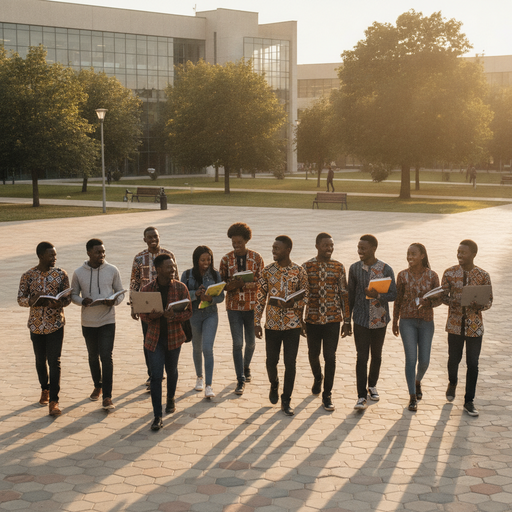
In a small, vibrant village on the outskirts of Kumasi, Ghana, lived a young girl named Amara. Every evening, while her peers were playing football in the dust, Amara would sit under the massive branches of an ancient baobab tree, clutching a tattered biology textbook she had borrowed from her local school. Her dream was simple yet profound: she wanted to become a doctor. However, in a family where every cedi was accounted for just to put food on the table, the cost of medical school felt like a mountain too high to climb.
Amara’s story is not unique. Across the vast and diverse continent of Africa, millions of brilliant minds harbor ambitions that are often sidelined by financial constraints. But what if I told you that the narrative is changing? Today, scholarship programs in Africa are more than just financial aid; they are the keys to unlocking the continent’s immense potential. From the bustling streets of Lagos to the serene landscapes of Nairobi, a new wave of educational funding is paving the way for the next generation of African leaders, scientists, and entrepreneurs.
For decades, the path to higher education for many African students involved seeking opportunities abroad. While international exposure remains invaluable, there is a significant shift happening. We are witnessing a surge in “In-Africa” scholarships—programs designed to strengthen local institutions while keeping talent within the continent. This shift recognizes that to solve African problems, we need African solutions cultivated on African soil.
However, the thirst for global knowledge remains. Many international organizations have expanded their reach, specifically targeting African scholars for prestigious universities in Europe, North America, and Asia. Whether you are looking to study in your home country or across the ocean, the current landscape of scholarship programs for Africa is broader and more accessible than ever before, provided you know where to look and how to navigate the process.
If you are a student or a young professional looking to fund your education, several names consistently stand out. These programs have built a reputation for not only paying tuition fees but also nurturing leadership skills and providing a lifelong network of peers.
Perhaps the most transformative initiative in recent history, the Mastercard Foundation Scholars Program is a massive $500 million initiative. It targets academically talented yet economically disadvantaged young people in Africa. What makes this program special is its holistic approach. It’s not just about the check; it’s about “transformative leadership.” Scholars receive comprehensive support, including tuition, living expenses, books, and most importantly, mentorship and internship opportunities. They partner with top-tier universities like the University of Cape Town, Kwame Nkrumah University of Science and Technology (KNUST), and even global giants like Stanford and McGill.
Named after two of the most influential figures in African history, this scholarship focuses on postgraduate students across the continent. If you have a passion for leadership and a desire to contribute to the upliftment of Africa, this is for you. Based in South Africa, it brings together young leaders from all African countries for a year of intense leadership development alongside their honors or master’s studies. It’s about building a community of leaders who are committed to the principles of reconciliation, education, and entrepreneurship.
For those in Commonwealth member countries (which includes many Africaations like Nigeria, Kenya, and South Africa), these scholarships are a golden ticket to the United Kingdom. Funded by the UK government, they cover master’s and PhD programs across various disciplines. The goal is to support sustainable development back home, meaning the UK government expects you to bring your newfound skills back to your community after graduation.
Germany has become a powerhouse for African researchers. Through the DAAD (German Academic Exchange Service), thousands of African students pursue postgraduate degrees in “Development-Related Postgraduate Courses.” The beauty of DAAD is its focus on practical, developmental impact. They offer specific programs where you can study in Germany or “In-Region” scholarships where you study at a leading African university but receive German funding.
I remember talking to a young maamed Tobi from Lagos who applied for the Chevening Scholarship three times before succeeding. “The first time, I wrote what I thought they wanted to hear,” he told me. “The third time, I told them my truth.”
Applying for a scholarship is an art form. It is more than just submitting your grades; it is about telling your story in a way that resonates with the mission of the provider. Here are a few “unspoken rules” to help you stand out:
What happens after the graduation cap is thrown into the air? This is where the true value of scholarship programs in Africa reveals itself. We are seeing a “reverse brain drain.” Scholars are returning to their home countries with advanced degrees in public health, renewable energy, and digital technology. They are starting tech hubs iairobi, refining agricultural techniques in Ethiopia, and drafting new legal frameworks in Rwanda.
Scholarships are the fuel for the African Renaissance. They bridge the gap between “what is” and “what could be.” When we fund one student, we aren’t just helping an individual; we are investing in an entire community. That student becomes a mentor, an employer, and a role model for the next generation of dreamers sitting under their own baobab trees.
While the opportunities are plentiful, we must acknowledge the hurdles. Access to stable internet for applications, the cost of English proficiency tests (like IELTS or TOEFL), and the difficulty of obtaining official transcripts can be daunting. Many scholarship providers are starting to recognize this, offering application fee waivers or even covering the cost of English tests for qualifying candidates. My advice? Join online communities. Groups on LinkedIn, Facebook, and Telegram dedicated to African scholars are goldmines for tips on how to navigate these technical hurdles.
The dream that Amara had under the baobab tree is the same dream shared by millions across the continent. The scholarship programs available today are not just handouts; they are investments in the future of the world. Africa is the youngest continent on Earth, and its intellectual capital is its greatest resource.
If you are reading this and wondering if you are “good enough” or if it’s “worth the effort,” remember Tobi from Lagos. Remember that the only scholarship you are guaranteed to lose is the one you never apply for. The doors are swinging open, the funding is waiting, and the world is ready for your unique African perspective. Start your research, sharpen your pen, and tell your story. Your future—and the future of the continent—is waiting.