 11
11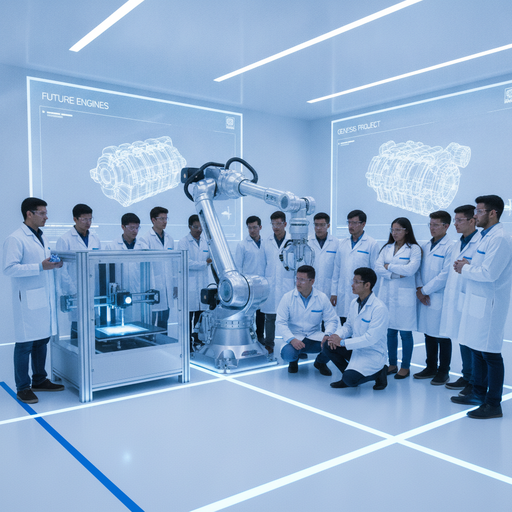
Think about the last thing you touched today. Was it your smartphone, the steering wheel of your car, or perhaps a simple ceramic coffee mug? Every single one of these items shares a common origin story. They didn’t just appear out of thin air; they were born in the intricate, high-speed, and increasingly digital world of manufacturing. For a long time, the word “manufacturing” conjured images of dark, soot-filled factories and repetitive manual labor. But walk into a modern production facility today, and you’ll find something entirely different: a clean, high-tech environment where robots and humans collaborate in a digital symphony.
If you have ever been curious about how raw materials are transformed into sophisticated technology, or if you want to be the person who designs the systems that build our future, a manufacturing course is more than just an educational path—it is an invitation to the front lines of the modern industrial revolution. In this article, we will explore why enrolling in a manufacturing course is one of the smartest career moves you can make in the 21st century.
To understand what you learn in a manufacturing course today, we have to look at how much the industry has changed. We are currently living through what experts call Industry 4.0. This era is defined by the “Smart Factory,” where machines are coected to the internet, data is analyzed in real-time, and artificial intelligence predicts when a part might break before it actually does.
In a modern manufacturing course, you aren’t just learning how to operate a machine. You are learning how to manage a complex ecosystem. You become a bridge between the physical world and the digital world. You learn about the “Digital Twin”—a virtual replica of a physical product or system that allows engineers to test and simulate scenarios without ever touching a piece of metal. This shift from “manual” to “digital” is why the demand for skilled manufacturing professionals is skyrocketing.
When you sign up for a manufacturing program, you might be surprised by the breadth of the curriculum. It’s not just about hammers and nails; it’s about software, logic, physics, and strategy. Here are some of the core pillars you will likely encounter:
Everything starts with a blueprint. In these modules, you learn to use sophisticated software like AutoCAD, SolidWorks, or Fusion 360. You will learn how to take an idea from a rough sketch to a precise 3D model. But it doesn’t stop there. CAM software then translates those designs into a language that machines can understand, telling a robotic arm or a CNC mill exactly where to move.
Computer Numerical Control (CNC) is the backbone of modern production. You will learn how to program and operate machines that can cut metal and other materials with a precision of a fraction of a human hair. Furthermore, as automation becomes standard, courses now include robotics—teaching you how to program, maintain, and collaborate with industrial robots.
To build something great, you have to understand what it’s made of. Why do we use carbon fiber for race cars but aluminum for airplanes? A manufacturing course dives deep into the properties of metals, polymers, ceramics, and composites. Understanding how these materials react to heat, pressure, and tension is vital for any aspiring manufacturer.
This is perhaps the most exciting frontier. Unlike traditional manufacturing, which often involves cutting material away, additive manufacturing builds objects layer by layer. From 3D-printing medical implants to engine parts for rockets, this technology is changing the world, and a good course will give you hands-on experience with these machines.
Manufacturing isn’t just about the “how”; it’s about the “how well.” A significant portion of a high-level manufacturing course is dedicated to management philosophies like Lean Manufacturing and Six Sigma. These aren’t just buzzwords; they are the secrets to how companies like Toyota and Apple maintain such high quality and efficiency.
Lean focuses on eliminating waste—anything that doesn’t add value to the final product. Six Sigma uses statistical data to reduce defects to near zero. Learning these methodologies transforms your mindset. You start seeing the world in terms of processes and optimizations. This “systems thinking” is a skill that is highly transferable to almost any industry, from healthcare to finance.
One of the biggest myths about manufacturing is that it limits you to a factory floor. In reality, the career paths are incredibly diverse. Here are just a few roles that graduates of manufacturing courses often step into:
The pay is also competitive. Because there is a global shortage of “middle-skill” and “high-skill” workers who understand both the tech and the hardware, companies are willing to pay a premium for people who have completed a formal manufacturing course.
Another reason to enter this field now is the shift toward sustainability. We are entering the era of “Circular Manufacturing.” This means designing products so they can be easily disassembled, recycled, or repurposed at the end of their life. Manufacturing courses are now integrating “Green Engineering” into their curriculum.
If you care about the environment, manufacturing is actually one of the best places to make a difference. By optimizing a single production line to use 10% less energy or 20% less water, you can have a massive positive impact on the planet—far more than most individual lifestyle changes could ever achieve.
With so many options available—from community college certifications to university degrees and online bootcamps—how do you choose? Here are a few tips:
Manufacturing is a tactile field. You can read all the books you want, but nothing beats the experience of actually operating a lathe or a 3D printer. Ensure the course offers access to modern equipment or virtual reality simulations.
Certain certifications, such as those from the National Institute for Metalworking Skills (NIMS) or the Society of Manufacturing Engineers (SME), carry a lot of weight with employers. Check if the course prepares you for these exams.
Does the school or platform have coections with local or global companies? Courses that offer internships or job placement assistance are incredibly valuable for getting your foot in the door.
The world will always need makers. As long as we need houses to live in, devices to communicate with, and vehicles to travel in, manufacturing will remain the heartbeat of global civilization. Taking a manufacturing course is not just about learning a trade; it’s about gaining the power to turn a concept into a physical reality.
Whether you are a high school student looking for a high-tech career, a mid-career professional looking to pivot, or a hobbyist who wants to take their skills to the next level, the world of manufacturing is open and waiting. It is a field that rewards curiosity, precision, and iovation. By mastering the tools of today, you become the architect of tomorrow. So, why wait? The future is waiting to be built—and you could be the one to build it.