 11
11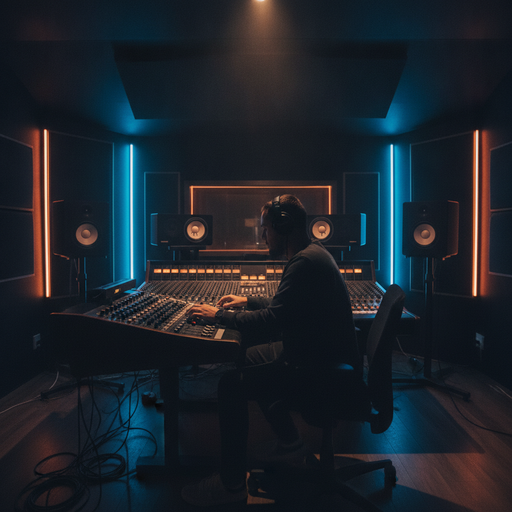
Imagine standing in a room where the air feels heavy with anticipation. In front of you sits a massive console, glowing with hundreds of tiny LEDs and populated by an army of sliders known as faders. You put on a pair of high-fidelity headphones, and suddenly, the world changes. What was once a chaotic mess of recorded drums, guitars, and vocals transforms into a cohesive, heart-pounding masterpiece under your fingertips. This isn’t just a dream; this is the daily reality of an audio engineer.
For many of us, our love for music started with a single song that made the hair on our arms stand up. We wondered, “How did they make it sound so huge?” or “Why does the vocal feel like it’s whispering directly into my ear?” The answer lies in the invisible art of audio engineering. However, moving from a casual listener to the person behind the glass requires more than just a “good ear.” It requires a bridge between passion and technical mastery. That bridge is a professional audio engineering course.
There is a common misconception that audio engineering is simply about pressing a red “record” button and sliding a few volume knobs up and down. If only it were that simple! In reality, an audio engineer is a scientist, an architect, and a psychologist all rolled into one. You are tasked with capturing the raw energy of a performance and translating it into a format that can be enjoyed on everything from a $10,000 home theater system to a pair of cheap earbuds on a noisy subway.
When you enroll in an audio engineering course, you stop looking at sound as just “music” and start seeing it as frequencies, amplitudes, and phases. You learn that a kick drum isn’t just a “thump”—it’s a combination of a low-end pressure wave and a high-end transient click. Understanding these nuances is what separates a hobbyist from a professional who gets hired by major labels and film studios.
We live in an era where you can learn almost anything on the internet for free. While YouTube tutorials are fantastic for quick tips, they often lack the structured foundatioecessary for a long-term career. Imagine trying to build a skyscraper by watching ten-minute videos on how to install windows, without ever learning how to pour a concrete foundation. Eventually, things are going to collapse.
An audio engineering course provides that foundation. It takes you through a logical progression: from the physics of sound and signal flow to advanced mixing techniques and mastering. Moreover, a structured course offers something a video can’t: feedback. Having an industry veteran listen to your mix and point out that your bass is out of phase or your compression is too aggressive is worth more than a thousand hours of solo practice. It fast-tracks your growth by years.
If you’re wondering what actually happens inside the classroom (or the virtual studio), here are the core pillars that most high-quality audio engineering courses cover:
Before you touch a microphone, you need to understand how sound behaves in a room. You’ll learn about reflection, absorption, and how different frequencies interact with physical spaces. This knowledge is crucial whether you’re setting up a multi-million dollar studio or trying to make your bedroom sound professional.
Understanding signal flow is perhaps the most critical skill for any engineer. It involves knowing exactly where the electrical signal goes from the moment it hits the microphone diaphragm, through the cables, into the preamp, through the outboard gear, and finally into the Digital Audio Workstation (DAW). If something goes wrong—and in audio, it often does—knowing your signal flow is the only way to troubleshoot the problem quickly.
Whether it’s Pro Tools, Logic Pro, Ableton Live, or FL Studio, the DAW is your primary workspace. A professional course won’t just teach you the shortcuts; it will teach you how to manage complex sessions with hundreds of tracks, how to use automation to create movement, and how to utilize plugins to sculpt your sound.
Did you know that moving a microphone just one inch can completely change the character of a recording? You will learn about polar patterns, frequency responses, and the “Proximity Effect.” You’ll discover why a Shure SM57 is a legend for snare drums and why a large-diaphragm condenser is usually the go-to for intimate vocals.
Once the recording is finished, the real storytelling begins. Mixing is the process of balancing all the recorded elements to create a finished product. This is where you learn the “Big Three” tools: EQ, Compression, and Reverb.
An audio engineering course teaches you how to use EQ to “carve out” space for every instrument so they don’t fight each other. You’ll learn how to use compression to control the dynamics of a performance, making it feel powerful and consistent. Most importantly, you’ll learn the art of critical listening—training your ears to hear subtle details that most people miss.
One of the most exciting things about completing an audio engineering course is the sheer variety of career paths available. It’s not just about working in a recording studio with bands. The skills you gain are highly transferable across multiple industries:
The best choice depends on your learning style and goals. On-campus programs offer the benefit of physical access to high-end hardware—gear that might cost more than a luxury car. The networking opportunities with fellow students and local professionals are also invaluable.
On the other hand, online audio engineering courses have reached incredible levels of quality. They allow you to learn at your own pace and often provide access to world-class mentors from across the globe. For many, starting with an online course to master the basics and then moving into a specialized program is a cost-effective way to break into the industry.
Many students worry that they need a massive budget to get started. While a course will introduce you to professional gear, the “Golden Age” of home recording means you can start your journey with a relatively modest setup. A solid audio interface, a versatile condenser microphone, a pair of flat-response studio monitors, and a treated room are all you need to start applying the lessons you learn in your course.
Audio engineering is a lifelong journey of discovery. It is a field that rewards curiosity, patience, and a relentless pursuit of “the perfect sound.” By taking a formal course, you aren’t just learning how to use software; you are gaining a new way of interacting with the world. You will start hearing the subtle reverb in a hallway, the rhythm in the city streets, and the hidden layers in your favorite records.
If you’ve ever felt the pull of the faders or the thrill of a perfectly captured vocal, don’t ignore it. The world needs people who can bridge the gap between silence and sound. Whether you want to win a Grammy, sound design the next blockbuster game, or simply produce your own music to a professional standard, an audio engineering course is the first step toward making that dream a sonically stuing reality.