 11
11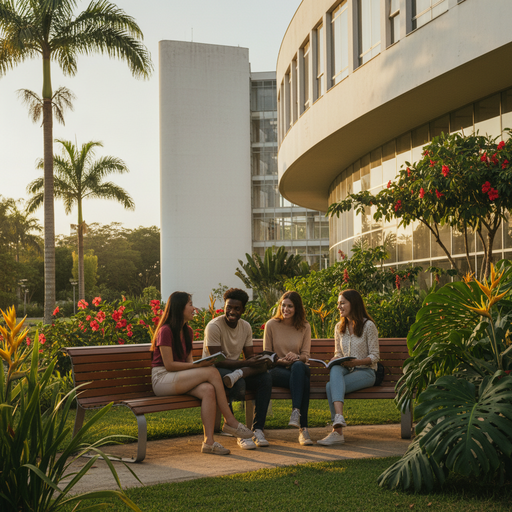
Imagine waking up to the sound of distant samba rhythms, the scent of fresh pão de queijo wafting through the air, and the realization that your classroom for the day is nestled within one of the most vibrant cultures on the planet. For many, Brazil is a land of postcards—the Christ the Redeemer statue, the lush Amazon rainforest, and the golden sands of Copacabana. But for the savvy international student, Brazil represents something much more profound: a world-class academic frontier that is increasingly opening its doors to the global community through generous scholarship programs.
The journey of studying abroad is often viewed as a luxury reserved for those with deep pockets. However, Brazil is turning that narrative on its head. As an emerging powerhouse in research, particularly in fields like tropical medicine, biofuels, and social sciences, the Brazilian government and its top-tier universities are actively seeking international talent. If you have ever dreamt of pursuing your degree in a place where academic rigor meets unparalleled cultural richness, this guide is your roadmap to making that dream a reality without breaking the bank.
Before we dive into the specific scholarship “how-tos,” it is essential to understand why Brazil is becoming a hotspot for international students. Unlike many Westerations where tuition fees have skyrocketed, Brazil’s public universities—which are the most prestigious in the country—are actually free of charge for those who pass the entrance exams. However, for international students, the real gems are the “Fully Funded” packages that cover not just tuition, but also your flight, monthly stipend, and health insurance.
Studying in Brazil offers a unique perspective that you simply caot get in Europe or North America. You will be at the heart of the Global South, observing firsthand the challenges and triumphs of a developing giant. Plus, there is the Portuguese language. Being one of the most spoken languages in the world, fluency in Portuguese opens massive professional doors across South America, Africa, and Europe.
One of the oldest and most successful initiatives is the PEC-G (Program for Undergraduate Students). This program is a collaboration between the Brazilian Ministry of Foreign Affairs and the Ministry of Education. It is specifically designed for students from developing countries that have educational agreements with Brazil.
Under PEC-G, students can apply to hundreds of different courses at Federal and State universities across the country. The beauty of this program is its inclusivity. If you are selected, your tuition is completely waived. While it is primarily a tuition-waiver program, many students can apply for additional “Promisaes” grants once they arrive in Brazil to help with living expenses.
If you already have a bachelor’s degree and are looking to specialize, the PEC-PG (Program for Postgraduate Students) is your best bet. This program focuses on Master’s and Doctoral degrees. Unlike the undergraduate version, the PEC-PG is almost always fully funded, providing a monthly stipend that allows you to focus entirely on your research.
Brazil’s research infrastructure is impressive. Universities like the University of São Paulo (USP) and UNICAMP consistently rank as the best in Latin America. Through PEC-PG, you gain access to high-tech labs and mentors who are leaders in their respective fields. The application typically requires a well-thought-out research project and a letter of acceptance from a Brazilian professor, so networking starts early!
For those looking for a more streamlined application process involving multiple universities, the GCUB International Mobility Program is a fantastic option. Organized by the International Cooperation Group of Brazilian Universities (GCUB), this program offers hundreds of scholarships every year for Master’s and PhD candidates.
What makes GCUB-Mob unique is the sheer variety of partner institutions. Whether you want to study Marine Biology in the coastal city of Recife or International Relations in the capital city of Brasília, this program likely has a spot for you. The scholarship generally includes a full tuition waiver, monthly living allowance, and sometimes a one-time settlement grant to help you buy essentials when you first land.
Applying for a scholarship in a foreign country can feel like navigating a labyrinth. However, successful candidates often follow a very specific rhythm. Here is how you can stand out:
The Celpe-Bras is the only officially recognized certificate of proficiency in Portuguese. Even if a program doesn’t strictly require it at the moment of application, having it will put you miles ahead of the competition. It shows commitment to the culture and the academic environment.
Brazilian bureaucracy is legendary. You will need to have your diplomas and transcripts translated by a sworn translator and “apostilled” or legalized by the Brazilian consulate in your home country. Do not leave this for the last minute, as it can take weeks or even months.
Brazilian selection committees love to see “Social Impact.” In your essay, don’t just talk about your grades. Talk about how studying in Brazil will help you contribute to your home country upon your return. How will your research bridge the gap between Brazil and your nation?
Wiing the scholarship is just the begiing. Living in Brazil is a sensory explosion. You will find that Brazilians are incredibly welcoming to foreigners. It is common for professors to invite you over for a “churrasco” (barbecue) or for classmates to help you navigate the local health system.
Cost of living varies greatly. While São Paulo and Rio de Janeiro can be expensive, cities in the Northeast or the South are very affordable on a student stipend. Most universities have “Restaurantes Universitários” (RUs) where you can get a full, nutritious meal for less than a dollar. These RUs are the lifelines of the Brazilian student population.
The journey to a scholarship in Brazil is more than just an academic pursuit; it is a transformation. It is about learning to navigate a complex, beautiful, and diverse society. It is about building a global network of friends and colleagues that will last a lifetime. Whether you are pursuing a degree in Engineering, Fine Arts, or Public Health, the Brazilian scholarship system offers a bridge to a future filled with possibility.
So, take the leap. Research the programs mentioned above, start practicing your “Tudo bem,” and get your documents in order. The universities of Brazil are waiting to welcome you to the heart of South America. Your story is just begiing, and the next chapter might just be written under the palm trees of a Brazilian campus.