 11
11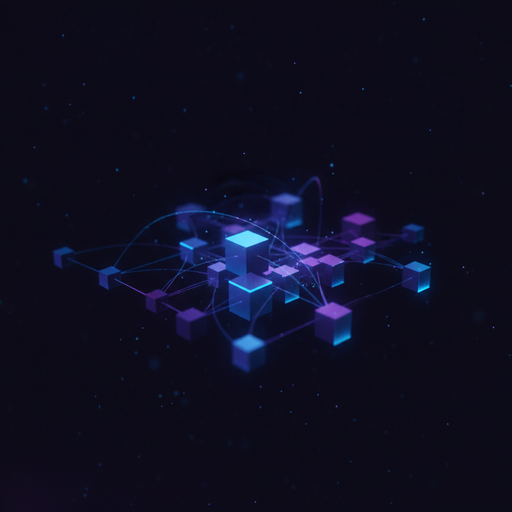
Imagine you are sitting at your favorite local coffee shop. You order a latte, tap your card on the reader, and wait for that satisfying beep. In those few seconds, a complex dance happens behind the scenes. Your bank talks to the coffee shop’s bank, they verify you have the money, they take a small fee, and finally, the transaction is approved. We have lived this way for decades, relying on “middlemen” to tell us what is true and who owns what. But what if there was a way to prove ownership and transfer value without needing a central authority? That is the question that birthed the blockchain revolution.
Welcome to your first step into the world of decentralized technology. This guide is designed as a foundational blockchain course for begiers, stripping away the confusing jargon and focusing on the story of how this technology is changing the world. You don’t need to be a computer scientist or a Wall Street trader to understand this. All you need is a bit of curiosity and an open mind.
To understand blockchain, let’s travel back in time to a small, isolated village. In this village, everyone trades goods—goats, wheat, and handcrafted tools. To keep track of who owes what, the villagers appoint a “Grand Bookkeeper.” This person has a giant ledger where they record every trade. However, this system has flaws. What if the bookkeeper makes a mistake? What if they take a bribe to delete someone’s debt? What if the bookkeeper’s house catches fire and the ledger is destroyed?
The villagers decide on a new system. Instead of one bookkeeper, everyone gets their own copy of the ledger. Every time a trade happens, the whole village gathers. They aounce the trade, and everyone writes it down in their own book at the same time. If someone tries to cheat by claiming they have ten goats when they only have two, their book won’t match everyone else’s. The community will simply reject the lie. This is exactly what a blockchain is: a digital, shared, and immutable ledger that records transactions across a network of computers.
Now that we have the concept of a shared ledger, let’s look at the “blocks” and the “chain.” Think of a block as a single page in our village ledger. Each page (block) contains three main things:
This structure creates incredible security. If a hacker tries to change a transaction in an old block, the hash of that block changes. Because the next block contains the old hash, the link is broken. The entire network immediately sees that the chain has been tampered with and rejects the change. To successfully hack a blockchain, you would have to change every single block on every single computer in the network simultaneously—an impossible task.
In our modern world, power is centralized. If you want to send money, you go through a bank. If you want to post a photo, you go through a social media giant. These companies act as the “Grand Bookkeepers.” They own your data, they set the rules, and they can lock you out at any time.
Blockchain is revolutionary because it is decentralized. There is no central server. Instead, the network is run by thousands of individual computers (called nodes) spread across the globe. No single person, government, or corporation owns the blockchain. It is a system run by the people, for the people. This removes the “single point of failure.” If one bank’s server goes down, the system crashes. If one node in a blockchain goes down, the thousands of others keep the network humming along perfectly.
As you progress through your journey of learning blockchain, you will constantly hear about these three pillars. They are the reasons why industries from healthcare to real estate are so excited about this technology:
Because everyone has a copy of the ledger, anyone can look at the history of transactions. While your personal identity is often hidden behind a digital address, the movement of value is public. This makes it incredibly hard for corruption or fraud to go uoticed.
In the digital world, we are used to “Edit” and “Delete” buttons. Blockchain doesn’t have those. Once a block is added to the chain, it is there forever. It caot be changed or erased. This creates a permanent, undeniable record of history.
Through the use of advanced mathematics (cryptography), blockchain ensures that only the person who owns a digital asset can spend it. You don’t need to trust a person; you only need to trust the math.
Many people think blockchain is just about Bitcoin. While Bitcoin was the first successful use of blockchain, it is just the tip of the iceberg. Think of Bitcoin as the “email” of the blockchain world—the first simple application. Now, we are entering the era of “programmable money” and “Smart Contracts.”
A Smart Contract is like a digital vending machine. If you put in the right amount of money and select a snack, the machine automatically gives you the product. No cashier is needed. Smart Contracts are lines of code stored on the blockchain that automatically execute an agreement when certain conditions are met. For example, a smart contract could automatically release an insurance payout to a farmer if a satellite detects a drought, or it could transfer the title of a house the moment the buyer sends the funds. No lawyers, no long waiting periods, and no human error.
We are currently in the “1995 era” of the internet for blockchain. Back then, people thought the internet was just for sending emails or a fad for nerds. Today, we can’t imagine life without it. Blockchain is on the same trajectory. Companies like IBM, Walmart, and Maersk are already using blockchain to track supply chains. Governments are looking at it for secure voting. Even artists are using it to sell digital art (NFTs).
By taking a blockchain course for begiers now, you are positioning yourself at the forefront of the next industrial revolution. Whether you are a business professional, a creative, or just a curious individual, understanding how decentralized trust works will be a vital skill in the coming decade.
The world of blockchain moves fast, but your learning journey should be steady. Here is how you can continue from here:
Learning blockchain feels like learning a new language. At first, it sounds like gibberish. But as you start to see the patterns—the blocks, the links, the shared ledger—the world starts to look different. You begin to see the flaws in our old, centralized systems and the incredible potential of a world where trust is built into the code itself.
You have just completed the first “block” of your education. The chain continues from here. The decentralized future isn’t just coming; it is already being built, one transaction at a time. Are you ready to be a part of it?