 11
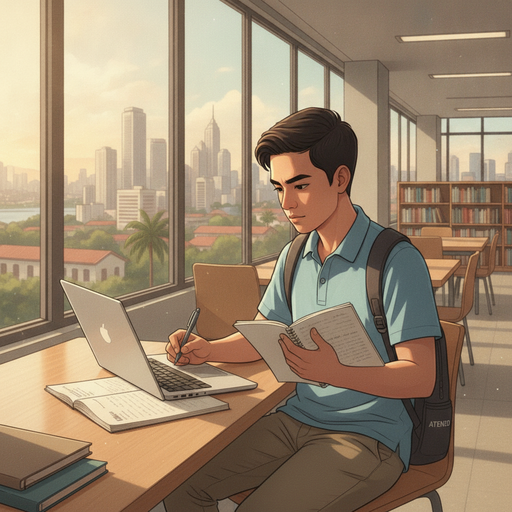
Imagine a young girl named Maria sitting by a kerosene lamp in a small coastal town in Leyte. She spends her nights pouring over borrowed textbooks, her eyes heavy but her heart fueled by a singular ambition: to become a doctor. For Maria, and millions of other Filipino students, education isn’t just about learning facts; it is the golden ticket out of poverty. However, the reality of rising tuition fees and the high cost of living often turns these dreams into distant echoes.
The Philippines is a nation that deeply values education. Families will often sell their last piece of land or take on multiple jobs just to see a child walk across that stage in a cap and gown. But what if hard work and intelligence could pave the way instead of just financial sacrifice? This is where the diverse landscape of scholarship programs in the Philippines comes into play. From government-funded initiatives to private philanthropic foundations, there is a path for those who are willing to seek it.
The Philippine government, through various agencies, serves as the largest provider of financial assistance for students. These programs are designed to ensure that “no student is left behind,” focusing on both academic merit and financial need.
For those who have a passion for numbers, experiments, and iovation, the Department of Science and Technology (DOST) offers one of the most prestigious scholarships in the country. The DOST-SEI scholarship aims to produce a pool of highly qualified scientists and engineers who will drive the nation’s technological progress. It’s not just about the monthly stipend—which is quite generous—it’s about joining a community of intellectuals dedicated to nation-building. Many scholars often describe the “Return of Service” agreement not as a burden, but as a chance to give back to the country that invested in them.
Under the Universal Access to Quality Tertiary Education Act, the Commission on Higher Education (CHED) has expanded its reach significantly. The Tertiary Education Subsidy (TES) is a game-changer for students enrolled in both public and private institutions. Unlike traditional scholarships that require a 95% average, the TES prioritizes students from low-income households, particularly those included in the Listahanan 2.0. It covers tuition in private schools and provides a substantial allowance for books, transportation, and room and board.
Beyond the big two, there are niche programs like the GSIS Scholarship for children of government employees and the OWWA Scholarship for the dependents of our modern-day heroes, the OFWs. These programs recognize the specific contributions of different sectors of society, ensuring that the benefits of public service and overseas labor trickle down to the next generation.
While the government handles the bulk of the load, the private sector in the Philippines plays a vital role in bridging the education gap. Many of the country’s largest conglomerates view education as their primary Corporate Social Responsibility (CSR) pillar.
The late Henry Sy Sr. believed that if you send one child to college, that child can lift the whole family out of poverty. The SM Foundation Scholarship is legendary for its comprehensive support. It doesn’t just pay for tuition; it provides part-time job opportunities during school breaks and guaranteed job placement within the SM Group upon graduation. For many “SM Scholars,” the foundation becomes a second family.
Other giants like the Aboitiz Foundation and the Metrobank Foundation offer specialized grants often focused on leadership and community involvement. These foundations look for more than just high grades; they look for students who have a vision for their community. They invest in the “whole person,” providing seminars, leadership camps, and networking opportunities that prepare students for the corporate world.
Sometimes, the best help is the one closest to you. Many City Halls and Provincial Capitols have their own scholarship programs. Whether it’s the “Iskolar ng Landayan” or a provincial merit grant, LGUs are increasingly allocating budgets to support their constituents. The advantage of LGU scholarships is the proximity; the application process is often handled locally, and the requirements are tailored to the specific needs of the community.
Knowing that scholarships exist is only half the battle. The application process can be daunting, filled with paperwork, examinations, and nerve-wracking interviews. Here is a roadmap to help you navigate the maze:
Being a scholar is a badge of honor, but it also comes with immense pressure. Most programs require a “maintaining grade.” For a student struggling with poor internet access or a noisy home environment, keeping a 2.0 or an 85% average can be a source of constant anxiety.
However, this pressure also builds character. Scholars often develop superior time-management skills and a level of resilience that their non-scholar peers might not yet possess. They learn to balance the weight of their family’s expectations with the demands of a difficult curriculum. The stipend, while helpful, often goes straight to rice and utility bills rather than “luho” (luxuries), highlighting the sacrifice inherent in the journey.
The landscape of scholarship programs in the Philippines is a testament to the nation’s belief in the power of the youth. Whether it is a government grant or a private foundation’s helping hand, these programs do more than just pay for books; they validate a student’s hard work and provide a glimmer of hope where there was once only uncertainty.
If you are a student reading this, remember that your current financial situation does not define your potential. The resources are out there, waiting for those with the courage to apply and the discipline to persevere. And if you are a graduate who once benefited from these programs, remember to look back and pull someone else up. Education is the greatest equalizer, and through these scholarships, we are building a Philippines where every “Maria” can eventually become the doctor, engineer, or leader she dreams to be.