 11
11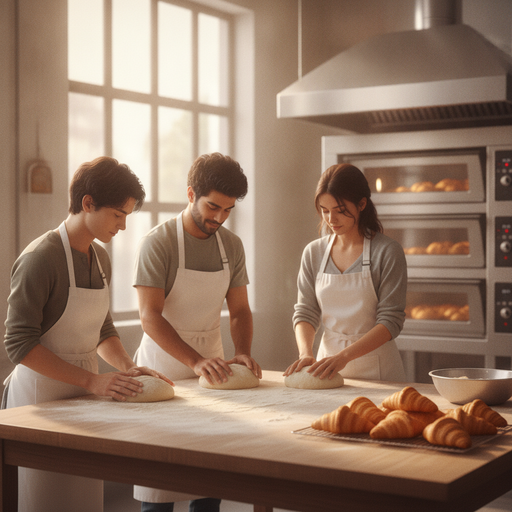
We have all been there. You see a mesmerizing video of a glossy chocolate ganache cascading over a perfectly leveled sponge cake, or perhaps a slow-motion shot of a sourdough loaf crackling as it comes out of the oven. Inspired and hungry, you head to the kitchen, apron tied tight, ready to create a masterpiece. But three hours later, the kitchen looks like a flour bomb went off, the cake has a mysterious crater in the middle, and the bread is hard enough to be used as a doorstop. It is a frustrating rite of passage for many home bakers, but it is also the exact moment when the idea of a professional baking course starts to feel less like a luxury and more like a necessity.
Baking is often described as a science, and unlike cooking—where you can “eyeball” the salt or throw in an extra handful of onions—baking demands precision, patience, and a deep understanding of how ingredients interact. While YouTube tutorials are a fantastic starting point, there is an invisible barrier between watching someone else fold egg whites and actually feeling the weight of the spatula in your own hand. This is where the magic of a structured baking course comes in. It is not just about learning to follow a recipe; it is about learning the “why” behind every whisk and the “how” behind every rise.
One of the most common misconceptions about signing up for a baking course is that you are paying for recipes you could easily find on Pinterest for free. However, any seasoned baker will tell you that a recipe is merely a roadmap. A baking course provides the compass, the terrain knowledge, and the survival skills to navigate that map. In a professional setting, you are taught the fundamental techniques that serve as the building blocks for thousands of different pastries.
In a comprehensive baking course, the first thing you learn is respect for your ingredients. You begin to understand that flour is not just white powder; it is a complex structure of proteins and starches. You learn why cold butter creates flaky layers in a croissant while room-temperature butter creates a tender crumb in a pound cake. Understanding the chemical reactions—like the Maillard reaction that browns your crust or the way sugar stabilizes egg foams—transforms you from a hobbyist into a technician. When you know how the science works, you stop panicking when things go wrong because you finally have the tools to fix them.
There is a specific tactile language in baking that a screen simply caot communicate. A baking course gives you the opportunity to feel the elasticity of a well-kneaded dough, the “ribbon stage” of beaten eggs, and the specific resistance of a macaron batter that is ready to be piped. Having an instructor stand beside you to say, “Stop here, it’s ready,” or “Give it two more folds,” is an invaluable experience that shaves months, if not years, off your learning curve. This muscle memory is what separates the amateurs from the pros.
Whether you choose an intensive in-person workshop or a high-quality interactive online program, the environment of a baking course offers benefits that go far beyond the oven. There is a unique camaraderie that forms over a shared tray of burnt cookies or a successful batch of éclairs. Baking can be a solitary activity at home, but in a course, it becomes a social and intellectual exchange.
As you progress through a baking course, you will likely find that you gravitate toward a specific niche. The world of baking is vast, and a general course often serves as a gateway to specialized paths. You might discover a hidden talent for the structural engineering required for tiered wedding cakes, or perhaps the meditative, slow-paced rhythm of artisanal bread making speaks to your soul.
Specialized courses allow you to dive deep into topics like:
This is the realm of the delicate and the decorative. You will learn the secrets of tempered chocolate, the geometry of puff pastry, and the colorful world of French macarons. It is a path for those who love precision and have an eye for aesthetic beauty.
If you find joy in the transformation of simple flour, water, and salt into a crusty, airy masterpiece, this is for you. You will learn about wild yeast starters (sourdough), hydration levels, and the ancient techniques of long fermentation that make bread both delicious and digestible.
For many, a baking course is the first step toward a career change. The “cottage food” industry has exploded in recent years, with many home bakers turning their kitchens into profitable small businesses. However, passion alone isn’t enough to run a successful bakery. A professional course often includes modules on food safety, scaling recipes for large production, and even the basics of food styling and photography.
By the end of a certification program, you gain the confidence to put a price tag on your work. You realize that you aren’t just selling a cake; you are selling the hours of training, the high-quality ingredients, and the professional technique that ensures every bite is perfect. This professional edge is what allows you to stand out in a crowded market of home-based sellers.
Perhaps the most profound lesson a baking course teaches you is how to fail. In a controlled environment, a fallen soufflé isn’t a disaster—it’s a lesson. Instructors often encourage students to push boundaries, and through that process, you learn that most mistakes are recoverable. You learn how to turn a failed cake into cake pops or a broken ganache into a rich chocolate sauce. This resilience translates into everyday life, teaching you that with the right technique and a bit of patience, you can overcome almost any hurdle.
Enrolling in a baking course is an investment in yourself. Long after the last crumb of your final project has been eaten, the skills you have acquired remain. You gain the ability to provide joy to your family and friends, the confidence to experiment with new flavors, and perhaps even the foundation for a new career. The kitchen stops being a place of stress and becomes a sanctuary of creativity.
So, the next time you find yourself staring at a flat loaf of bread or a curdled frosting, don’t be discouraged. Let it be the catalyst that drives you to seek out professional guidance. Whether it’s a weekend workshop or a year-long diploma, the world of baking is waiting to be explored. Put on your apron, grab your rolling pin, and get ready to transform your passion into a craft. After all, life is too short for bad cake.