 11
11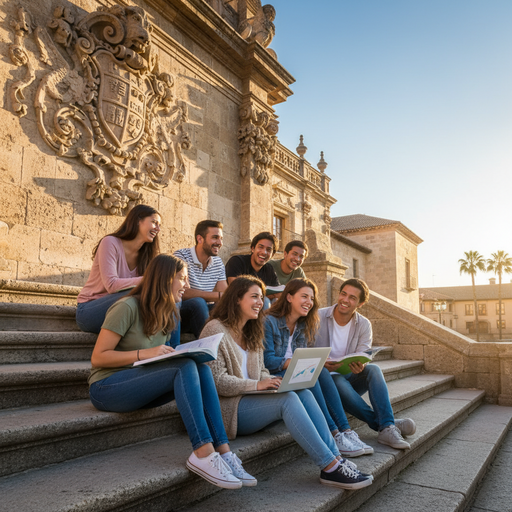
Imagine waking up to the sound of distant church bells echoing through a cobblestone plaza. You grab a quick café con leche and a toasted mollete before heading to a centuries-old university building draped in ivy and history. In the afternoon, you study in a lush park under the warm Mediterranean sun, and by evening, you’re discussing philosophy or economics with international friends over a plate of shared tapas. This isn’t just a scene from a movie; for thousands of international students every year, this is the reality of studying in Spain.
Spain has long been a magnetic destination for scholars worldwide. It offers a unique blend of high-quality academic standards, a vibrant cultural heritage, and a quality of life that is hard to match anywhere else in Europe. However, for many, the financial hurdle of tuition fees and living expenses can feel like a daunting wall. That is where the diverse array of scholarship programs in Spain comes into play. These programs are designed to bridge the gap between your ambition and your reality, making the Spanish academic dream accessible to everyone, regardless of their financial background.
Before we dive into the specifics of the scholarships, it’s worth asking: why Spain? Beyond the beautiful weather and the world-renowned cuisine, Spain boasts some of the oldest and most prestigious universities in the world, such as the University of Salamanca and the Complutense University of Madrid. Spanish institutions are increasingly climbing the global rankings, particularly in fields like business, engineering, renewable energy, and the humanities.
Moreover, learning or perfecting your Spanish while studying is a massive career booster. Spanish is the second most spokeative language in the world, and being fluent in it opens doors to markets across Latin America, the United States, and Europe. A scholarship in Spain isn’t just a financial grant; it’s an investment in a global future.
Navigating the world of international funding can feel overwhelming. To make it easier, we can categorize Spanish scholarships into three main pillars: Government-funded programs, University-specific grants, and Private Foundation scholarships. Each has its own set of requirements and target audiences.
The Ministry of Foreign Affairs, European Union and Cooperation (MAEC) along with the Spanish Agency for International Development Cooperation (AECID) offers one of the most prestigious scholarship programs in the country. These grants are specifically designed for international students, particularly those from developing countries or countries with strategic ties to Spain.
If you are already a student at a university that has a partnership with a Spanish institution, the Erasmus+ program is your golden ticket. Funded by the European Union, Erasmus+ facilitates student mobility across Europe. It is perhaps the most famous scholarship program in the world, known for fostering a sense of European identity and cultural exchange.
While often associated with short-term exchanges (6 to 12 months), Erasmus+ also offers “Erasmus Mundus Joint Master Degrees.” These are prestigious, integrated study programs delivered by an international consortium of higher education institutions. They often include full scholarships that cover everything from travel to monthly living costs.
Almost every major university in Spain, from the University of Barcelona to the University of Granada, has its own dedicated funding for international talent. These are often merit-based, meaning they are awarded to students with exceptional academic records.
If you are a student from a Spanish-speaking country in Latin America, the Fundación Carolina is a name you must know. This foundation promotes cultural and scientific cooperation between Spain and the Ibero-American Community of Nations. They offer hundreds of scholarships every year for Master’s degrees, PhDs, and short-term research stays. Their application process is highly competitive but incredibly rewarding, often covering the full cost of the program and travel.
Applying for a scholarship in Spain is a marathon, not a sprint. It requires careful plaing and a deep attention to detail. Here is how you caavigate the process like a professional:
Most scholarship deadlines fall between January and May for the academic year starting in September. I always recommend starting your research at least a year in advance. Create a spreadsheet to track deadlines, required documents, and specific essay prompts for each program.
While there are an increasing number of English-taught programs in Spain, many scholarships require proof of Spanish proficiency. The DELE (Diplomas de Español como Lengua Extranjera) or SIELE are the standard certifications. Even if your course is in English, having a basic level of Spanish will significantly strengthen your application and show your commitment to integrating into Spanish society.
The paperwork in Spain can be rigorous. You will typically need:
In your personal statement, don’t just list your achievements. Tell your story. Why Spain? Why this specific program? How will this scholarship help you change your community or your field of study? Spanish selection committees value passion, cultural curiosity, and a clear vision for the future.
Once you secure your scholarship, the real adventure begins. Living in Spain as a student is an education in itself. You will learn the art of the “siesta” (though mostly as a concept, as modern university schedules are busy!), the joy of late-night diers, and the importance of “sobremesa”—the long conversation that happens at the table after a meal has finished.
Cost of living in Spain is generally lower than iorthern European countries or the US. Cities like Valencia, Seville, and Granada are particularly affordable for students. Madrid and Barcelona are more expensive, but they also offer more part-time work opportunities and a more frantic, cosmopolitan energy. Most student visas in Spain allow you to work up to 30 hours a week, provided it doesn’t interfere with your studies, which can help supplement your scholarship stipend.
Many students miss out on opportunities because of simple mistakes. First, never wait until the last day to upload your documents—Spanish government portals can be notoriously slow when traffic is high. Second, ensure your translations are “Sworn Translations” (Traducciones Juradas); regular translations are often rejected. Finally, don’t ignore the “small” scholarships. Many students only apply for the big, famous ones. Smaller, niche grants from specific departments or local regional governments often have fewer applicants and a higher chance of success.
Studying in Spain is more than just getting a degree; it is a transformative experience that challenges your perspectives and broadens your horizons. Whether you are researching renewable energy in Zaragoza, studying international law in Madrid, or diving into art history in Seville, the opportunity is there for the taking.
Scholarship programs in Spain are the keys that unlock this world. They require effort, persistence, and a bit of “ganas” (desire), but the reward is a lifetime of memories and a world-class education. So, start your research, polish your personal statement, and take that first step toward your Spanish adventure. The sun is waiting for you.