My Scholarship Treasure Hunt: How I Found Funding for My Dreams (A Beginner’s Guide)
Hi there, future scholar! If you’re reading this, chances are you’ve got big dreams – dreams of a college degree, a certification, or perhaps even an advanced study program. But, like many of us, you might also be staring at the daunting price tag of education, feeling a knot tighten in your stomach. Trust me, I’ve been there. I remember the day I got my acceptance letter; pure elation quickly turned into a cold sweat when I saw the tuition fees. It felt like my dreams were about to be put on hold, all because of money.
But then, a glimmer of hope appeared: scholarships.
For a long time, I thought scholarships were only for academic geniuses or athletic superstars. I imagined them as mythical golden tickets, impossible for someone like me to get. Oh, how wrong I was! My journey to funding my education wasn’t a sprint; it was a treasure hunt. A sometimes frustrating, often exhilarating, and ultimately rewarding search for scholarships. And today, I want to share my map with you.
This isn’t just a dry guide; this is my story, infused with practical tips, lessons learned, and a whole lot of encouragement. So, grab a cup of coffee, settle in, and let’s embark on this scholarship adventure together!
The Initial Shock: Why Scholarships Became My Lifeline
Let’s be honest, education is expensive. Whether it’s tuition, books, living expenses, or even just the daily coffee needed to fuel late-night study sessions, the costs add up quickly. For me, taking out massive loans wasn’t an option I wanted to pursue. The idea of starting my professional life burdened by debt was terrifying.
That’s when I realized scholarships weren’t just "extra money"; they were my lifeline. They were the key to unlocking my educational goals without piling on financial stress. Scholarships are essentially free money given to students based on various criteria – academic merit, financial need, specific talents, community involvement, or even unique characteristics. You don’t pay it back. Ever. And that, my friends, is a game-changer.
Busting the Myths: What I Learned About Scholarships
Before we dive into the "how-to," let’s clear up some common misconceptions I used to believe:
- Myth #1: Scholarships are only for straight-A students. False! While academic scholarships exist, there are countless opportunities for students with average grades, specific interests, or unique backgrounds. My grades were good, but not perfect, and I still found plenty of options.
- Myth #2: There aren’t enough scholarships for everyone. Also false! Millions of dollars in scholarship money go unclaimed every year because students don’t know about them or don’t bother to apply. Don’t let that be you!
- Myth #3: Applying for scholarships is too much work. It can be time-consuming, yes. But think of it this way: how many hours would you have to work at a minimum wage job to earn $500 or $1,000? Often, a few hours spent on a scholarship application can yield a much higher "hourly wage" in the form of free money.
- Myth #4: I’m not special enough to get one. Every single person has a unique story, unique experiences, and unique aspirations. Scholarships are often looking for that uniqueness. Don’t underestimate your own value.
Once I shed these myths, the whole process felt less intimidating and more like an exciting challenge.
The Great Search: Where I Started Digging for Gold
Okay, now for the practical part: where do you even begin your search for scholarships? This felt like looking for a needle in a haystack at first, but with a bit of strategy, it became much clearer. Think of it like mapping out your treasure hunt.
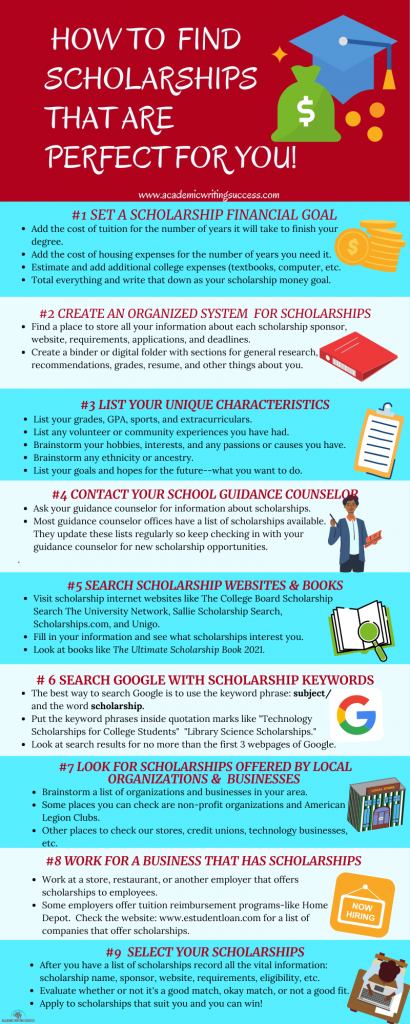
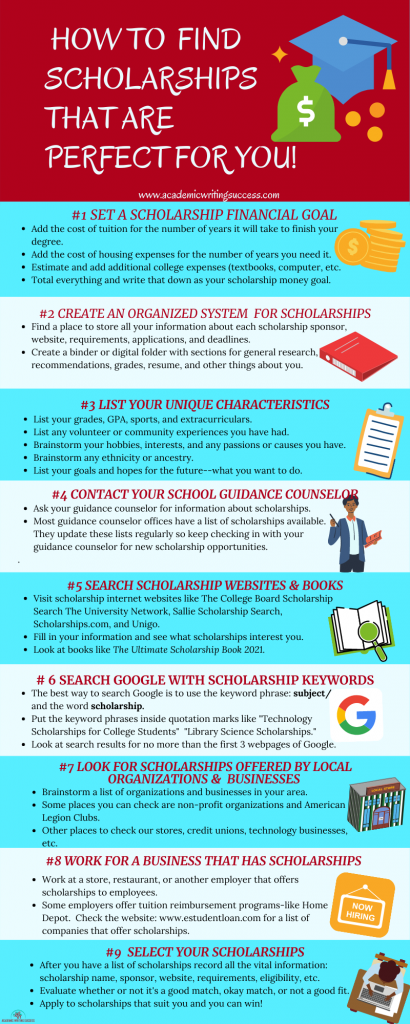
1. Start with Your School (or Future School)
This is often the easiest and most overlooked starting point.
- Your High School Counselor/College Advisor: They are a goldmine of information! They often have lists of local scholarships, know about opportunities specific to your school, or can point you to resources. Don’t be shy; schedule a meeting!
- Your Prospective College/University: Every college wants to attract good students, and they often have their own institutional scholarships.
- Admissions Office: Ask about scholarships available directly through the university.
- Financial Aid Office: This is their bread and butter! They can tell you about need-based aid, merit scholarships, and often have lists of external scholarships.
- Department-Specific Scholarships: If you know your major (e.g., engineering, nursing, arts), check with that specific department. They often have scholarships for students pursuing those fields.
2. Online Scholarship Databases: Your Digital Treasure Chest
These websites are designed to connect students with scholarships. They have powerful search filters that let you narrow down opportunities based on your profile.
- Popular Platforms I Used (and You Can Too!):
- Fastweb.com: One of the oldest and largest. You create a profile, and it matches you with scholarships.
- Scholarships.com: Similar to Fastweb, with a vast database.
- Cappex.com: Also offers college matching services.
- BigFuture by College Board: A reliable resource directly from the creators of the SAT/ACT.
- Niche.com: Beyond scholarships, it also helps with college search.
- Unigo.com: Offers unique, easy-to-enter scholarships alongside traditional ones.
Pro Tip: Create a dedicated email address just for scholarship applications. Your inbox will thank you! Also, be prepared to spend some time setting up detailed profiles on these sites – the more information you provide, the better they can match you.
3. Local Opportunities: The Hidden Gems in Your Community
Don’t underestimate the power of your local community! These scholarships often have fewer applicants, increasing your chances.
- Local Businesses: Many local banks, credit unions, small businesses, and corporations offer scholarships to students in their operating areas.
- Community Foundations: These organizations exist to support local initiatives, including education. A quick Google search for "[Your City/County] Community Foundation" can yield great results.
- Civic Organizations: Rotary Clubs, Lions Clubs, Kiwanis Clubs, American Legion, VFW, and other service organizations often have scholarships for local students.
- Religious Institutions: If you’re involved with a church, mosque, synagogue, or other religious group, inquire if they offer educational grants or scholarships.
4. Niche & Specific Scholarships: Finding Your Unique Fit
This is where your unique qualities really shine. There are scholarships for almost anything you can imagine!
- Ethnic or Cultural Background: Many organizations support students from specific backgrounds.
- Hobbies & Interests: Love gaming? Play an instrument? Passionate about environmental causes? There’s likely a scholarship for that!
- Specific Talents: Art, music, debate, drama, public speaking – if you excel in a particular area, look for scholarships that reward it.
- Parent’s Employer or Union: Check with your parents to see if their workplace or union offers scholarships to dependents.
- Medical Conditions or Disabilities: Organizations supporting specific conditions often have scholarships.
- Unique Characteristics: Left-handed? Tall? Love ducks? (Yes, seriously, there are some quirky ones!). Don’t rule anything out!
The key here is to think broadly about who you are and what makes you unique.
Crafting Your Application: Making Your Story Shine
Finding the scholarships is just the first step. The next is to create an application that makes you stand out. This is where you transform from a name on a form into a compelling candidate.
1. The Essay: Your Voice, Your Story
This is arguably the most critical part of most scholarship applications. It’s your chance to speak directly to the scholarship committee.
- Answer the Prompt, Fully: Read the essay question carefully. Don’t just skim it. Make sure every part of your essay addresses what they’re asking.
- Tell Your Story: Don’t just list achievements. Show them. If you volunteered, describe a specific moment that impacted you. If you faced a challenge, explain how you overcame it and what you learned. Use vivid language.
- Be Authentic: Don’t try to be someone you’re not. Your genuine voice will resonate more than a forced, generic one.
- Connect to the Scholarship’s Mission: If you know what the scholarship values (e.g., leadership, community service, overcoming adversity), weave those themes into your essay naturally.
- Proofread, Proofread, Proofread: A typo or grammatical error can make you look careless. Read it aloud. Ask a trusted friend, teacher, or parent to proofread it too. Fresh eyes catch mistakes!
2. The Resume/Activity List: Showcase Your Achievements
This is your highlight reel.
- Include Everything Relevant: Academic achievements, extracurricular activities, volunteer work, part-time jobs, leadership roles, awards, and honors.
- Use Action Verbs: Instead of "was a member of," try "led," "organized," "developed," "initiated."
- Quantify Whenever Possible: "Raised $500 for charity" is more impactful than "Helped raise money for charity."
- Tailor It: Just like your essay, adapt your resume slightly for each scholarship if possible, highlighting experiences most relevant to their criteria.
3. Letters of Recommendation: The Power of Others’ Words
Choose your recommenders wisely!
- Who to Ask: Teachers who know you well and can speak to your academic abilities, coaches who can attest to your teamwork and dedication, employers who can highlight your work ethic, or community leaders who have seen your impact.
- Ask Early: Give them plenty of time (at least 2-3 weeks, more if possible).
- Provide Information: Give them your resume, a list of your achievements, the scholarship’s criteria, and the deadline. Remind them of specific positive interactions or accomplishments they can highlight. Make it easy for them to write a glowing letter.
- Thank Them: A handwritten thank-you note goes a long way.
4. Transcripts and Test Scores: The Official Records
These are usually straightforward.
- Request Early: Your high school or college registrar might take time to process requests.
- Ensure Accuracy: Double-check that all your information is correct.
My "Aha!" Moments: Tips for Scholarship Success
During my hunt, I stumbled upon a few strategies that dramatically improved my chances. These are my "secret weapons" for finding success:
- Start Early, Apply Often: This is probably the most crucial advice. Scholarship deadlines are year-round. Don’t wait until the last minute. The more scholarships you apply for, the higher your chances of winning at least one.
- Stay Organized: Create a spreadsheet or use a dedicated folder to track:
- Scholarship name
- Website link
- Eligibility requirements
- Application components (essay, LOR, transcript)
- Deadline
- Status (applied, waiting, won/lost)
- Notes (e.g., "essay needs to focus on leadership")
- Read Instructions Carefully: I cannot stress this enough. Many applications are rejected simply because students didn’t follow the directions. Word counts, formatting, specific questions – pay attention to every detail.
- Re-purpose, Don’t Re-use Entirely: You might write an excellent essay for one scholarship. Don’t just copy-paste it for another. Adapt it. Tweak it to fit the new prompt. This saves time but still ensures personalization.
- Don’t Get Discouraged by Rejection: You will get "no’s." Everyone does. It’s part of the process. Don’t let it derail you. Keep applying! Each application is a learning experience.
- Seek Feedback: Before submitting, ask a teacher, mentor, or parent to review your essays and application. A fresh pair of eyes can catch errors or suggest improvements.
- Network (Carefully): Sometimes, knowing someone who knows someone can open doors to lesser-known scholarships. Attend college fairs, talk to professionals in your desired field, and ask if they know of any specific funding opportunities.
- Apply for Small Scholarships Too: Don’t dismiss $100 or $500 scholarships. Many students overlook them, thinking they’re not worth the effort. But a few small ones can add up quickly and cover your books, supplies, or even a month’s rent!
My Personal Victory: From Overwhelmed to Empowered
I remember feeling utterly overwhelmed when I first started. I spent hours sifting through online databases, feeling like I was getting nowhere. My first few essays felt clunky and generic. I got a few rejections, and my heart sank with each one.
But I kept at it. I refined my essay-writing process, learned to organize my applications better, and became more strategic in my search. I focused on scholarships where I truly fit the criteria, not just the biggest ones.
My first win was a local scholarship from a community organization – just $750. It wasn’t life-changing money, but the feeling of accomplishment was immense. It proved that my efforts were paying off. That small victory fueled me to keep going.
By the time I started college, I had accumulated several thousand dollars in scholarships, a mix of small local awards, a medium-sized university scholarship, and a niche scholarship related to my volunteer work. It didn’t cover everything, but it significantly reduced my student loan burden and allowed me to focus more on my studies and less on financial worries.
Your Journey Starts Now: Embrace the Hunt!
The search for scholarships might seem like a daunting task, a huge mountain to climb. But remember, every great journey begins with a single step.
You have a unique story, unique talents, and unique dreams. There are organizations out there looking for you. Don’t let the cost of education hold you back. Arm yourself with information, stay organized, tell your story with passion, and most importantly, never give up.
Your education is an investment in yourself, your future, and your potential. Scholarships are here to help make that investment possible. So, go forth, future scholar! Start your own scholarship treasure hunt today. The gold is out there, waiting for you to find it. Good luck!
Kata Kunci SEO yang Dimasukkan:
- Search for scholarships
- Find scholarships
- How to get scholarships
- Scholarship search guide
- Scholarship application tips
- Free money for college
- College funding
- Types of scholarships
- Scholarship essay
- Financial aid
- Student funding
- Beginner’s guide scholarships
- Scholarship myths
- Local scholarships
- Online scholarship databases
- Scholarship success
Struktur untuk Index Google:
- H1: My Scholarship Treasure Hunt: How I Found Funding for My Dreams (A Beginner’s Guide) – Judul utama, jelas, dan mengandung kata kunci.
- H2: The Initial Shock: Why Scholarships Became My Lifeline – Sub-judul untuk bagian penting.
- H2: Busting the Myths: What I Learned About Scholarships – Sub-judul untuk bagian penting.
- H2: The Great Search: Where I Started Digging for Gold – Sub-judul utama, mengandung kata kunci.
- H3: Start with Your School (or Future School) – Sub-sub-judul untuk detail.
- H3: Online Scholarship Databases: Your Digital Treasure Chest – Sub-sub-judul, mengandung kata kunci.
- H3: Local Opportunities: The Hidden Gems in Your Community – Sub-sub-judul, mengandung kata kunci.
- H3: Niche & Specific Scholarships: Finding Your Unique Fit – Sub-sub-judul, mengandung kata kunci.
- H2: Crafting Your Application: Making Your Story Shine – Sub-judul utama, mengandung kata kunci.
- H3: The Essay: Your Voice, Your Story – Sub-sub-judul, mengandung kata kunci.
- H3: The Resume/Activity List: Showcase Your Achievements – Sub-sub-judul.
- H3: Letters of Recommendation: The Power of Others’ Words – Sub-sub-judul.
- H3: Transcripts and Test Scores: The Official Records – Sub-sub-judul.
- H2: My "Aha!" Moments: Tips for Scholarship Success – Sub-judul utama, mengandung kata kunci.
- H2: My Personal Victory: From Overwhelmed to Empowered – Sub-judul untuk kisah pribadi.
- H2: Your Journey Starts Now: Embrace the Hunt! – Sub-judul penutup, call to action.
Penggunaan paragraf pendek, daftar bullet, dan kalimat yang mudah dicerna juga akan membantu pembaca dan bot pencarian Google.
 1
1